


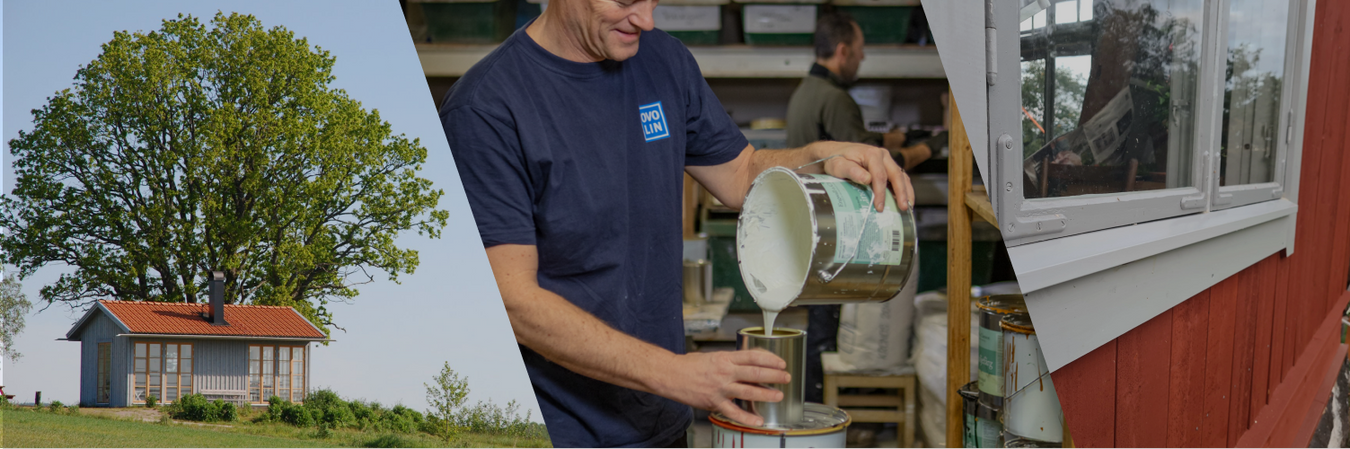


What is linseed oil paint?
Linseed oil paint is made from linseed oil and natural pigments. It penetrates the wood and protects from the inside out, and the wood remains breathable (it can breathe), allowing moisture to move naturally. In older houses, linseed oil paint is one of the most common traditional types of paint.
How do I prepare the surface before painting?
Brush off chalked paint, scrape away loose paint, and wash with suitable painter's detergent. Rinse with clean water and let the surface dry thoroughly. The moisture content in the wood should not exceed 16 % when painting. Replace rotten sections, sand away gray wood if necessary. If you have algae growth, wash with algae and mold detergent and rinse carefully before painting.
How is linseed oil paint applied?
The basic rule is that it should be thin and worked in. Work the paint into the surface with a brush, not a roller or spray, as those create layers that are too thick. Stir the paint before you start and remove any skin that forms without mixing it back into the can. Newly painted linseed oil paint can look almost mirror-glossy and will naturally dull over two to three months.
How long is the drying time between coats?
Allow approximately one to two days per coat. Drying time is affected by heat, light, and humidity, so it's better to wait a little longer than a little shorter. This way, you avoid bubbles and wrinkles.
When can I paint outdoors with linseed oil paint?
Spring and early summer are the best periods, but follow the weather. The daily temperature should preferably be above 10 °C. Avoid strong sun, rain, and heavy dew, and plan for longer drying times between coats than for modern water-based paints.